


Most people ring me after they’ve already seen one scurry across the bench at 2am. By then there’s usually a few hundred more somewhere you can’t see. That’s the thing about German cockroaches. The one you spotted is the tip of it.
So grab a cuppa, and let’s go through what’s actually happening in your place.
Where they actually hide
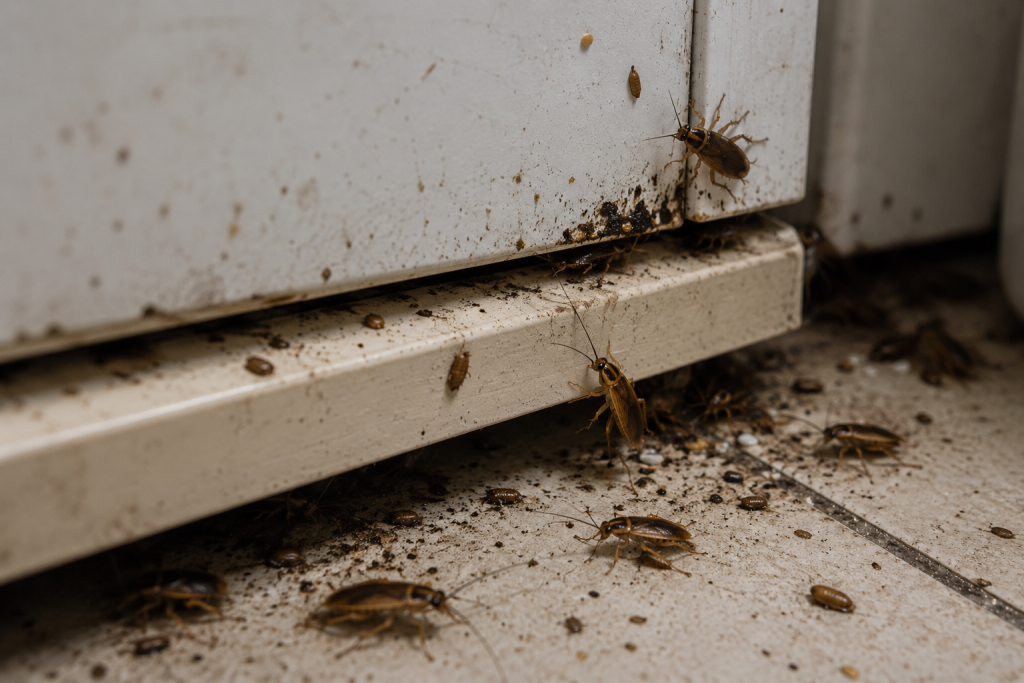
German cockroaches are small, about 12 to 15 millimetres, light brown, with two dark stripes behind the head. They like it warm, damp and tight. If a gap is about the thickness of a 20 cent coin, they’ll happily move in.
The kitchen is ground zero. Behind the fridge is a favourite, because the motor throws off heat and there’s always crumbs and condensation back there. Dishwashers are another one people forget, especially the rubber seal and the cavity underneath. Check under the sink too, where the pipes go through the wall and there’s a gap nobody ever sealed.

Then there’s the stuff you don’t think about. Power point cavities, the back of the microwave, the toaster, the coffee machine, the hinges of cupboard doors. Bathrooms get them as well, mostly around the vanity and behind the toilet cistern. And cardboard boxes. Stacks of delivery boxes in the laundry are basically a five star hotel.
One more thing. They hate light, so they’ll be tucked away all day and come out after dark. You’ll rarely catch them in the act.
Why Sydney is such good news for cockroaches
Our climate does them a lot of favours. Warm, humid summers, mild winters, and plenty of buildings with poor ventilation. A cockroach in Sydney doesn’t have to put much effort into surviving.
Then there’s how we live. In a block of units or a row of terraces, you share walls, pipes and wall cavities with the neighbours. So you can scrub your flat spotless and still get them, because they’ve walked in along a pipe from next door. I’ve seen this a lot in older strata buildings in places like Marrickville and Randwick. One unit has a problem, and within a few months three more do.
Takeaway and grocery packaging is another way they get in. Egg cartons, cardboard cartons from the supermarket, delivery bags. Roaches (or their egg cases) hitch a ride, and you carry them in yourself. Same goes for second-hand appliances. That cheap fridge off Marketplace might come with tenants.
And then the breeding. This is the part that makes me sigh. A female carries her egg case around until just before it hatches, and one case holds roughly 30 to 40 eggs. She can do this several times in her life. So a couple of survivors become a crowd quickly, and “I only saw one” stops being true within weeks.
How to tell you’ve got a problem
You don’t always need to see a live one. Look for the signs.
Droppings are the big one. They look like ground pepper or used coffee grounds, little specks and smears, usually in cupboard corners, along hinges, and under the sink. You might also find shed skins, which are pale brown and papery. And if the place has a musty, oily smell you can’t pin down, that’s often a heavy infestation too.
Here’s the rule I give everyone. If you’re seeing them in daylight, the population is big. They’re only out in the open because the good hiding spots are full. That’s when I stop saying “monitor it” and start saying “we need to act this week.”
Getting rid of them properly
Right, the useful part. Fair warning, this takes a bit of effort and a few weeks, not one afternoon.
Start with a proper clean. Pull the stove and fridge out if you can. Degrease the back of everything. Wipe down cupboards, bin the old boxes, and sweep up crumbs. Cleaning alone won’t fix it, but it takes away the food they’d rather eat than your bait.
Cut off food and water. Fix the dripping tap. Don’t leave the pet bowl out overnight. Dry the sink before bed. Honestly, this step is boring and it matters more than people think.
Use gel baits. This is the workhorse. You put tiny dots of gel in the places they travel, like hinges, corners, behind appliances and inside the cavities. They eat it, go back to the nest and others eat what comes out of them. Don’t spray around the bait. Surface spray on the same spot ruins it, because they’ll avoid it.
Add an insect growth regulator. IGRs stop nymphs from growing into breeding adults. Used with bait, they break the cycle. Without it you might knock the numbers down, but the next generation keeps coming.
Seal what you can. Silicone around pipes, gaps under the sink and cracks along the skirting. It won’t solve it alone, but it shrinks their highways.
Stick down some sticky traps. Not to kill them, mainly to see what’s going on. Put a few in the kitchen and bathroom, and check them after a few days. Lots of juveniles means a breeding nest nearby. It also tells you whether the baiting is working.
Don’t bother with bombs
I’ll say this plainly. Insect bombs and surface sprays often make it worse.
Roaches don’t die quickly, they bolt. A fogger pushes them deeper into the walls and into the neighbours’ place, and now you’ve got a bigger, more spread-out problem. Sprays can also make them avoid the areas where bait would’ve worked. It feels like action, which is why people do it. But I’ve turned up to plenty of jobs where someone had set off three bombs and the numbers were higher than before.
When to call a licensed pro
If you’ve been baiting for three or four weeks and you’re still seeing them, call someone. Same if it’s a block of units, because they’ll often need to treat more than one flat to actually clear it. Also if you’re renting, tell your agent early. It’s usually their responsibility, and delays make it more expensive for everyone.
Look for someone licensed, who’ll inspect first and explain what they’re using. If they quote you without even opening a cupboard, that’s a bit of a red flag.
A simple routine to keep them out
Once they’re gone, you want to keep it that way. Nothing fancy.
- Wipe the benches and stovetop every night, and sweep the floor.
- Don’t leave dishes in the sink overnight.
- Take the bin out daily if you can, or at least before it gets smelly. Use a lid that actually closes.
- Keep dry food in sealed containers.
- Break down cardboard boxes and get them out quickly rather than storing them.
- Check second-hand appliances and bags from the supermarket before bringing them inside.
If you spot one stray cockroach again later, don’t panic. Put a bit of gel down and keep an eye on it. Dealing with it early is far easier than dealing with it in six months. See German cockroach pest control Sydney
That’s about it. It’s a miserable problem, but it’s very beatable. And if you take one thing from this, make it the bit about the bombs. Check E1 Pest Solutions


