


You open your car door in the morning, get in, and notice something odd. A few tiny black droppings near the footwell. Maybe there’s a strange smell, or you’ve spotted a cockroach disappearing under the dashboard.
Not exactly the start to a pleasant drive.
Cars are surprisingly comfortable hiding places for pests. They’re sheltered from rain, have plenty of dark corners and, if you’ve left a few food wrappers behind, there’s sometimes a free meal waiting as well.
In Sydney, rats, mice and cockroaches can all find their way into parked vehicles. And if you don’t deal with the problem early, rodents can chew wiring and cause expensive damage.
Let’s look at how pests get inside cars, what signs to watch for and how to get rid of them safely.
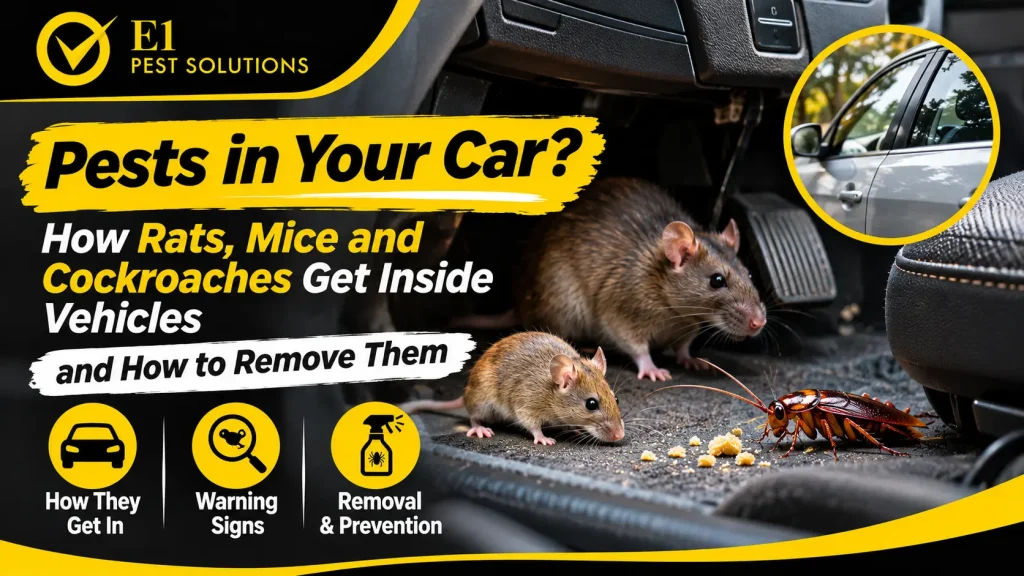
Why do rats, mice and cockroaches get inside cars?
A parked vehicle offers something pests are always looking for: shelter.
Rats and mice may enter engine bays, particularly when a car is parked overnight near gardens, rubbish areas or vegetation. The engine compartment provides a sheltered space, while insulation and other materials can become nesting material.
Cockroaches are usually attracted by food scraps, moisture and clutter inside the cabin. A takeaway wrapper left under the passenger seat or a few crumbs between the centre console and seat can be enough to attract them.
Sydney’s warm climate allows many pest species to remain active throughout the year. However, rodents may become particularly noticeable when temperatures drop and they’re searching for sheltered nesting areas.
Cars parked for several days or weeks can be more vulnerable because there’s less disturbance to discourage pests.
Where do pests hide inside your vehicle?
You might think pests would be easy to spot inside a car. Not necessarily.
Modern vehicles have plenty of hidden spaces, and pests can squeeze into areas you rarely inspect.
Some common hiding places include:
- Engine bay: Rats and mice may nest near insulation, wiring and other sheltered components.
- Air conditioning system: Cockroaches and other small insects may enter through ventilation openings or hide around accessible duct areas.
- Cabin air filter compartment: Debris and nesting material may accumulate around the filter housing.
- Under seats: Food crumbs and discarded wrappers make this an attractive hiding place for cockroaches.
- Boot space: Stored bags, cardboard and unused items can provide shelter.
- Dashboard cavities: Small gaps around the dashboard may offer places for insects to hide.
- Spare wheel compartment: This area is often forgotten, particularly when the boot is used for storage.
And don’t forget the garage. If your car is parked beside stored cardboard boxes, pet food or rubbish bins, rodents may already be living nearby.
5 signs your car may have a pest problem
Pests don’t usually announce themselves. But they do leave clues.
1. Droppings inside the car
Small, dark droppings around the footwells, boot or engine compartment can indicate rodent or cockroach activity.
Mouse droppings are generally small and pointed, while cockroach droppings can resemble black pepper or coffee grounds.
Don’t touch suspected droppings with bare hands or vacuum them while dry.
2. Chewed wires and insulation
This is one of the more serious signs of rodents.
Rats and mice may chew electrical wiring, rubber components and insulation while exploring or nesting inside the engine bay.
You might notice warning lights, electrical faults or a vehicle that suddenly refuses to start.
If you suspect damaged wiring, don’t keep driving without having the vehicle checked by a qualified mechanic.
3. Strange smells from the air conditioning
Have you switched on the air conditioning and noticed an unpleasant musty smell?
It could be accumulated moisture, a dirty cabin filter or organic material left behind by pests.
Rodent nesting material or a dead animal in an inaccessible area can also cause persistent odours. A mechanic should inspect the ventilation system before any pest treatment is attempted in that area.
4. Scratching noises around the engine bay
If you hear movement or scratching when approaching your parked vehicle, check for signs of nesting.
Rats and mice may use insulation or other soft materials to build nests. Look for shredded material, droppings and damage, but don’t reach blindly into the engine compartment.
5. Live cockroaches or shed skins
If you see cockroaches running under seats or disappearing into dashboard gaps, there may be more hiding nearby.
Cockroaches can leave behind droppings, shed skins and egg cases. Repeated sightings, especially during the day, deserve attention.
A single sighting doesn’t prove a major infestation, but several sightings are a good reason to investigate.
Why mice in car engine compartments can become expensive
A common concern among car owners is mice in car engine compartments.
Rodents may chew wiring insulation, rubber hoses and other materials while exploring the engine bay. Electrical damage can lead to warning lights, starting problems and expensive repairs.
Imagine leaving your car parked in the same spot outside your Sydney home for a week. It’s close to a garden bed, there’s some vegetation nearby, and the vehicle isn’t being used much.
That sheltered engine compartment can become an attractive nesting spot.
If you find droppings, nesting material or chewed components, arrange a mechanical inspection. Pest treatment may help address the infestation, but damaged wiring needs to be assessed and repaired by a qualified mechanic.
How to get rid of cockroaches in vehicles
Cockroaches in vehicles can be particularly annoying because they’re difficult to reach once they get into dashboard cavities, seat mechanisms and other enclosed areas.
Start by removing food wrappers, rubbish and anything else that could attract them. Empty the glovebox, clean under the seats and check the boot.
Vacuum accessible areas thoroughly, including the edges of floor mats and gaps around the centre console. If you find egg cases or repeated droppings, a deeper inspection may be needed.
Professional treatment may involve carefully selected products and targeted application methods suitable for vehicle interiors. Any product used must be approved for its intended application and applied according to the label.
Don’t use household insect bombs inside a car. Foggers can leave chemical residues on surfaces, damage interior materials and may not reach insects hiding in enclosed spaces.
Also, don’t spray random insecticides into air-conditioning vents, electrical components or dashboard openings.
What does professional vehicle pest control involve?
Effective pest control for cars starts with identifying which pest is present and where it’s hiding.
The treatment for a mouse nesting inside an engine bay is different from the treatment for cockroaches living under the seats.
Depending on the situation, a professional may:
- Inspect the cabin, boot and accessible engine areas for pest activity.
- Identify droppings, nesting material and likely entry points.
- Recommend suitable cleaning and removal methods.
- Use appropriate targeted pest treatments where permitted.
- Recommend monitoring to check whether activity continues.
- Advise on sealing accessible entry points and reducing attractants.
If you’re dealing with rodents, a pest controller and mechanic may both need to be involved. Pest control won’t repair damaged wiring, and mechanical repairs alone won’t necessarily stop rodents returning.
For an established infestation, it’s best to use a licensed pest management professional who can assess the vehicle and recommend a suitable approach.
How to prevent pests from getting into your car
A few simple habits can make your vehicle less attractive to pests.
- Remove takeaway wrappers and food containers after every trip.
- Vacuum crumbs from seats and floor mats regularly.
- Don’t store pet food or groceries in the car overnight.
- Check the boot for old bags and cardboard packaging.
- Keep your garage tidy and rubbish bins properly closed.
- Avoid parking directly beside dense vegetation where possible.
- Use your vehicle regularly rather than leaving it unused for long periods.
- Arrange an inspection if you notice droppings or chewed materials.
If your car is parked in a shared apartment garage, keep an eye on rubbish storage areas and report recurring rodent activity to building management.
And if you regularly park outside near gardens or bins, checking the engine bay occasionally is a sensible habit. We also serve in Rodent Removal Kellyville
Need vehicle pest control in Sydney?
Finding rats, mice or cockroaches inside your vehicle isn’t something to brush off. Rodents can damage important vehicle components, while cockroaches can establish themselves in areas that are difficult to clean properly.
E1 Pest Solutions provides Vehicle pest control Sydney services to help identify and address pest activity around vehicles and their parking areas.
If you’ve noticed droppings, scratching noises, nesting material or cockroaches inside your car, get the problem checked before it becomes a bigger headache. Because the last thing you want is to discover that something has been living in your car longer than you have. Check Riverstone Pest Control


