


It’s 2am and you can hear it. Scratching, then a thump, then a sort of dragging noise right above your bed. You lie there telling yourself it’s a possum. It’s probably not a possum.
Hearing rats in roof spaces is one of the most common calls we get in Sydney, and it’s usually the same story. The noises start small, people ignore them for a few weeks, and by the time they ring, there’s a family up there.
What those noises are actually telling you
Rats are mostly active at night, so that’s when you’ll hear them. Scampering sounds usually mean rats. Heavier thumps and thudding lean towards possums. Scratching inside the wall itself is nearly always rodents.
If you’re hearing movement at dusk and just before dawn, that’s the rush hour. They head out to feed and come back to sleep. And if you’re hearing it during the day too, that’s a worry. It usually means the nest is crowded.
Honestly, most people wait too long at this stage. They hope it’ll sort itself out. It won’t.
Why they pick your place
Rats need three things, same as the rest of us: food, water and somewhere warm to sleep. Your ceiling cavity gives them the last one for free.
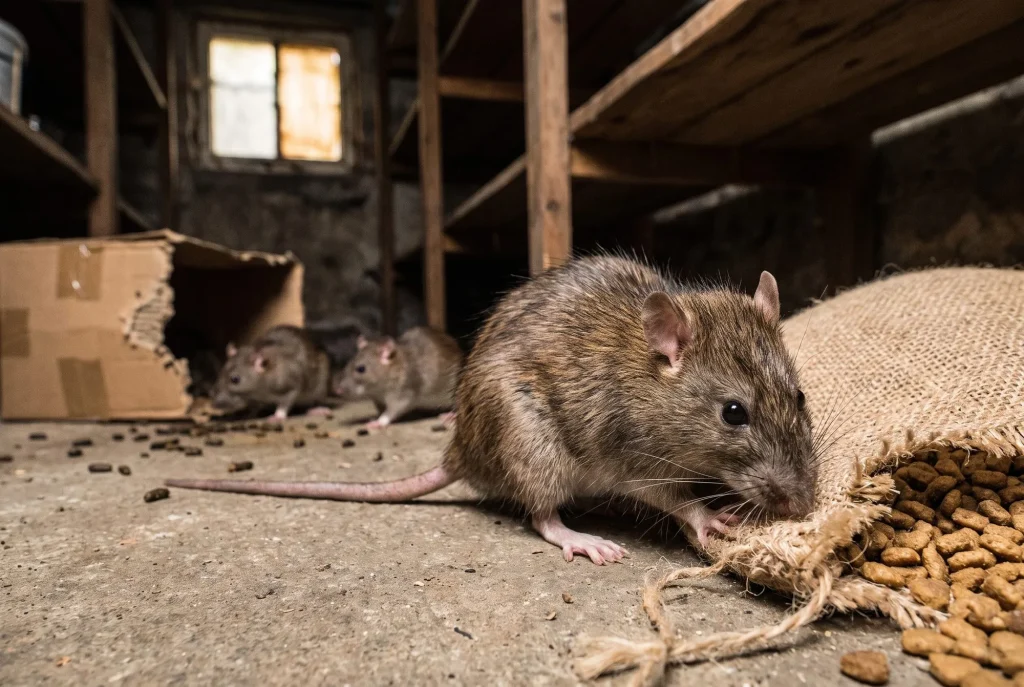
The food part is easier than you’d think. Fruit trees that drop their mandarins and lemons, pet food left out overnight, chook feed, bird seed, and bins with loose lids are all an open invitation. A compost heap near the house doesn’t help either.
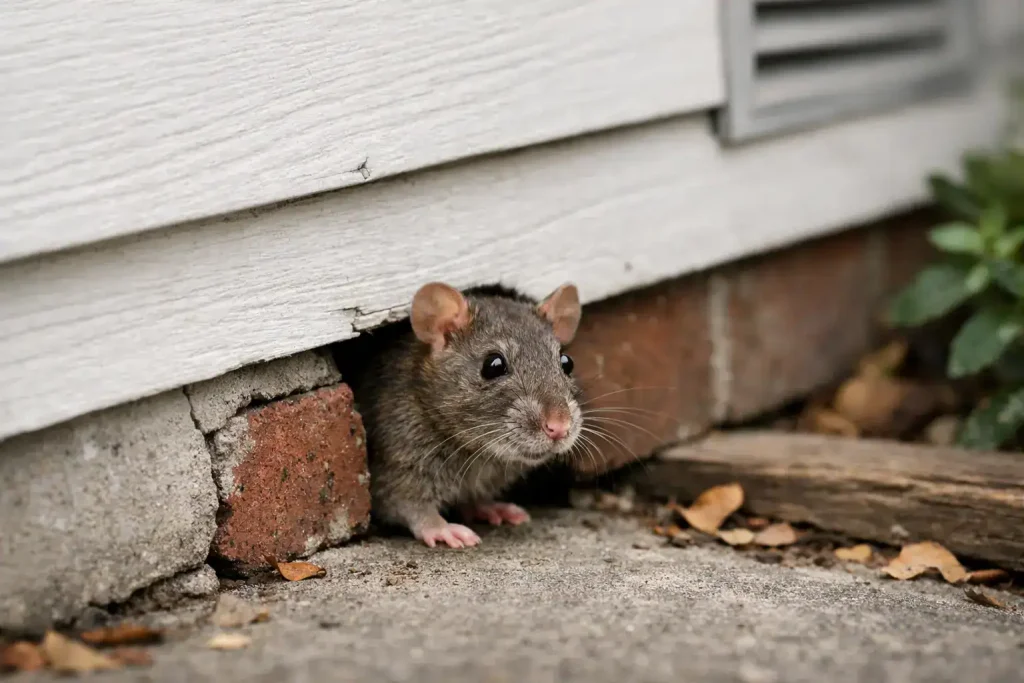
Then there’s how they get in. A mouse can squeeze through a gap about the width of a pen, and a rat only needs a hole about the size of a 50 cent piece. Gaps around pipes, damaged roof tiles, broken vents, eaves and the tops of walls are all fair game. They’ll also climb. Palm trees, vines and overhanging branches make good ladders onto a roof.
In a block of units it gets trickier. Shared walls, service risers and basement car parks give rats a highway between flats. You can do everything right and still get a visitor from next door.
Where they hide once they’re inside
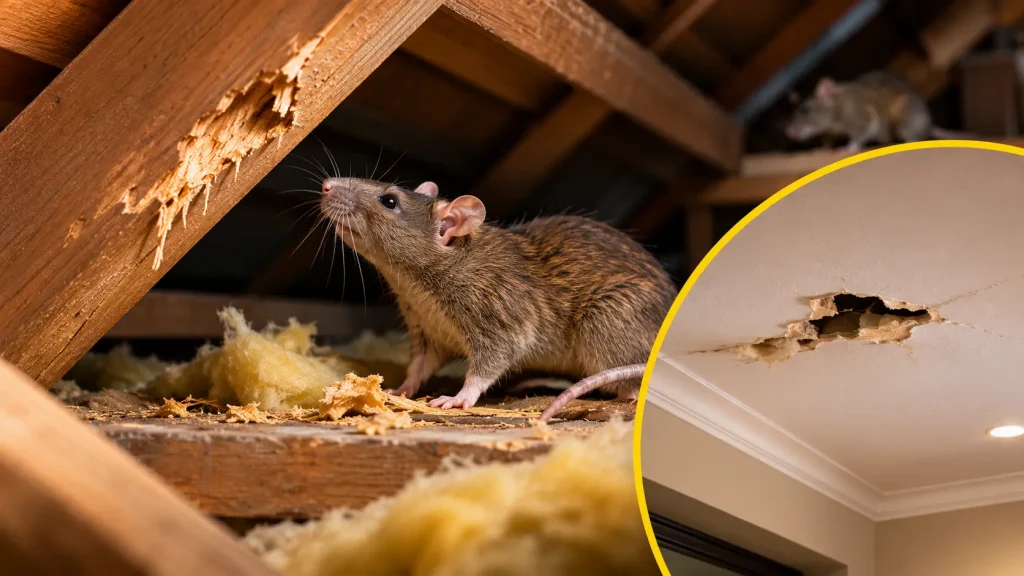
The ceiling cavity is the obvious spot, especially where the insulation sits. They love tunnelling through it and nesting in it. Wall voids, under the kitchen cabinets, behind the dishwasher and inside the roof near the hot water system get visited too.
A typical one in a rental: the tenant hears noises for a month, sets a couple of snap traps in the kitchen, catches nothing and assumes it’s fixed. Meanwhile the nest is above the bathroom and they’re travelling along the top plate of the wall. The trap was in the wrong place.
The damage they can cause
This is the bit that surprises people. Rats don’t just make noise. They chew constantly because their teeth never stop growing, and what they chew matters.
Wiring is the big one. Gnawed cables can cause shorts and, in the worst cases, electrical fires. If your lights flicker or a circuit keeps tripping for no reason, that’s worth checking. Insulation gets shredded and soiled, which makes your cooling and heating work harder. Pipes can get chewed too, which leads to leaks you won’t see until a stain appears on the ceiling.
And then there’s the health side. Rat droppings and urine can carry bacteria and parasites, and the smell of a rat that’s died in the wall is something you won’t forget. Droppings look like dark, rice-shaped pellets, and you’ll usually find them along skirting boards, in the pantry or on roof beams.
Other signs to watch for:
- Greasy rub marks along walls and beams
- Gnawed food packaging or chewed cardboard
- Shredded nesting material in quiet corners
- Pet behaving oddly, staring at the ceiling or sniffing at walls
Why DIY often doesn’t work
The mistake I see most is people going straight to the supermarket for baits. Poison blocks look like a quick fix, but the rat can eat it and then crawl into a spot you can’t reach to die. Now you’ve got a dead animal in the wall cavity, and the smell lasts weeks.
Baits can also be a risk to pets, kids and native wildlife. Birds of prey and owls can be poisoned by eating a rat that’s taken bait. That’s a real problem in a lot of Sydney suburbs.
Snap traps help, but only if you know where they’re travelling. Rats are cautious. They avoid new objects for a few days, so a trap that’s put down and checked once usually doesn’t catch much.
And here’s the thing nobody says out loud. If you don’t seal the entry points, you can trap a dozen and still have more arrive. You’re just emptying the bath with the tap running.
When it’s time to call a professional
If you’ve heard noises for more than a few days, found droppings, or noticed chewing, call someone. If you’ve got young kids, pets, or someone in the house with a health condition, call sooner.
A good mice control Sydney service will do three things. Find where they’re getting in. Treat the infestation using the right method for your property. And seal the entry points so you’re not back at square one in a month. That last part is where a lot of jobs fall over.
At E1 Pest Solutions, a typical visit starts with a proper inspection of the roof void, the subfloor and the outside of the house, because the problem is rarely where people expect it. Professional rodent removal Sydney work also covers cleaning up droppings and nesting material safely, which you shouldn’t be doing with a dustpan and bare hands.
If you’ve got a serious problem and you’re looking for a rat exterminator, ask what they’re actually going to do about entry points and follow-up visits. Anyone who just drops bait and leaves isn’t solving it.
Keeping them out for good
Once the job’s done, a few habits make it stick.
- Trim branches and vines at least a metre back from the roofline
- Pick up fallen fruit and keep the compost covered
- Use bins with tight lids, and rinse them occasionally
- Store pet food and chook feed in sealed containers
- Check roof tiles, vents and eaves once or twice a year
- Seal gaps around pipes with steel wool or metal mesh, not foam alone, because rats chew through foam
Quick tip. If you hear rats in ceiling spaces again after treatment, ring straight away. It usually means a gap was missed, and it’s much easier to fix early.
Don’t leave it until the smell tells you
Rats are clever, they’re fast, and they don’t leave on their own. The sooner you act, the smaller the job. It might feel like overkill to call someone over a bit of scratching, but nobody has ever regretted catching it early.
If you’re hearing noises and you’re not sure what’s up there, get in touch with E1 Pest Solutions for an inspection. It’s a lot cheaper than rewiring a ceiling. See also pest control Box Hill NSW


