


You spot a trail of ants marching across your kitchen bench. Without thinking twice, you grab a can of ant spray, give them a quick blast and watch them disappear. Problem solved… right?
Not quite.
If you’ve ever sprayed ants only to see them return a few days later, you’re definitely not alone. It’s one of the most common complaints we hear from Sydney homeowners. The reason is surprisingly simple: the ants you can see are usually only a tiny part of a much bigger colony hidden somewhere out of sight.
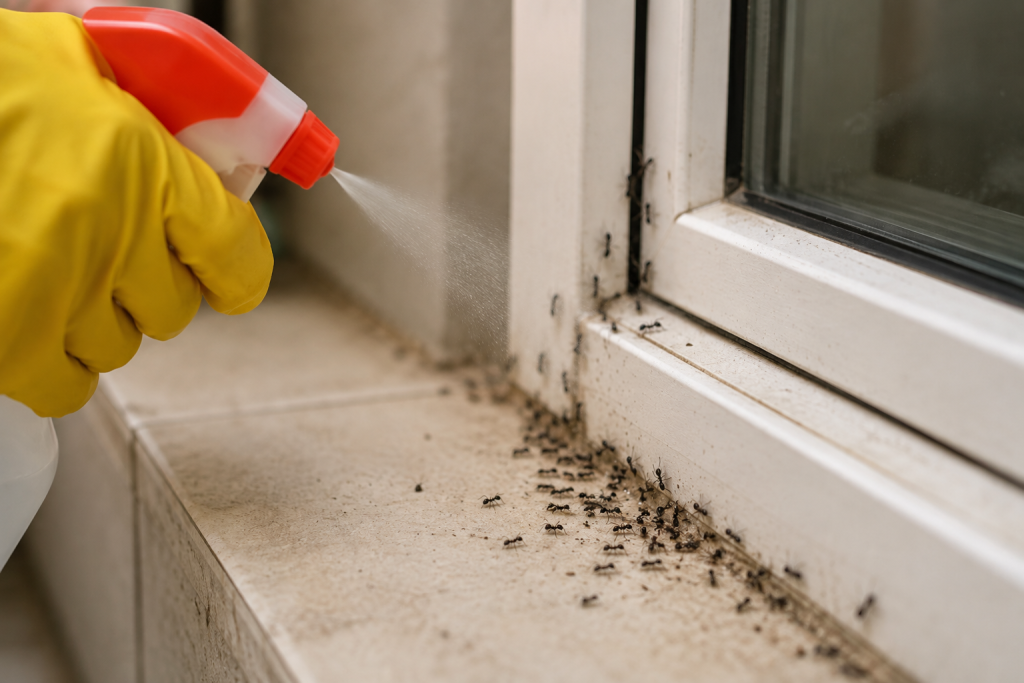
Let’s look at why spraying ants rarely fixes the real problem and what actually works.
Spraying Ants Only Treats What You Can See
Think of an ant colony like an iceberg.
The ants walking across your floor are just the visible tip. Hidden behind your walls, under pavers, inside garden beds or beneath your concrete slab could be thousands of worker ants, eggs, larvae and one or more queens keeping the colony alive.
A standard aerosol spray kills the worker ants it touches. That’s satisfying in the moment, but it doesn’t remove the nest or stop new workers from replacing the ones you’ve just killed. In many cases, the colony simply sends out another group within days.

Why Do Ants Keep Coming Back?
Many Sydney homes experience recurring ant problems because the conditions attracting them never change.
Ants are usually searching for three things:
- Food
- Water
- Shelter
A few biscuit crumbs, a leaking tap, pet food left outside or even sugary residue around the bin can keep an ant colony returning again and again.
Even if you spray every ant you see, the colony still knows exactly where your house is.
Sometimes Spraying Can Make Things Worse
This surprises many homeowners.
Certain ant species respond to disturbance by splitting their colony. Instead of one nest, you can end up with several smaller nests spread around your property. Pest professionals call this colony budding.
That means today’s small problem can become tomorrow’s much larger infestation if the wrong treatment is used.
So What Actually Works?
Professional ant Pest control Syndey focuses on eliminating the colony rather than simply killing visible ants.
A proper treatment usually starts with a detailed inspection. The technician follows ant trails, identifies the species and works out exactly where they’re nesting.
Depending on the situation, treatment may include:
- locating and treating the nest directly
- professional ant baits carried back to the colony
- non-repellent treatments along entry points
- sealing gaps where ants enter
- removing food and moisture sources that attract them
When worker ants carry bait back to the nest, it can be shared throughout the colony, including the queen. That’s why bait-based strategies often provide far longer-lasting results than simply spraying the ants you see.
Every Ant Species Needs a Different Approach
Not every ant behaves the same way.
Sydney is home to dozens of ant species, and what works for one may not work for another.
For example:
- Coastal brown ants often build multiple interconnected nests.
- Black house ants are attracted to sweet foods.
- Argentine ants can form enormous colonies stretching across neighbouring properties.
- Carpenter ants may indicate moisture issues inside timber structures.
This is one reason DIY treatments often disappoint. Without knowing which species you’re dealing with, it’s difficult to choose the right control method.
Spraying ants might make them disappear for today, but it rarely solves tomorrow’s problem.
Long-term ant control is about finding the colony, treating it properly and removing the conditions that allowed ants to move in in the first place. That’s why professional treatments focus on the source of the infestation—not just the ants wandering across your kitchen bench.
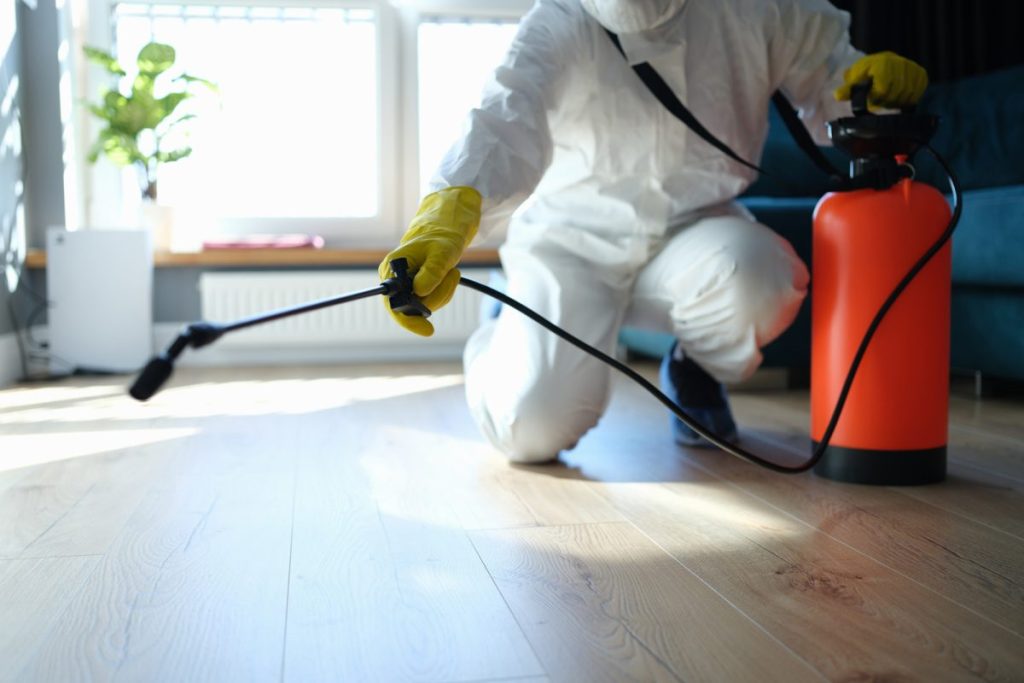
If ants keep returning no matter how many cans of spray you use, it’s probably time for a different approach.
At E1 Pest Solutions, we provide professional ant pest control throughout Sydney, using proven treatment methods that target the colony for longer-lasting protection. We’ll identify the species, locate the source of the problem and recommend the most effective solution for your home or business.
Frequently Asked Questions
Does ant spray kill the queen?
Usually not. Most supermarket sprays only kill the worker ants they come into direct contact with. The queen remains protected inside the nest, where she continues producing new workers.
Why do ants come back after spraying?
Because the nest is still active. Spraying removes the ants you can see but doesn’t eliminate the colony responsible for sending them into your home.
Is bait better than spray?
In many situations, yes. Ant baits allow workers to carry the treatment back to the colony, helping eliminate the queen and other ants that never leave the nest. The best approach depends on the species and where they’re nesting.
How long does professional ant treatment last?
Most professionally treated homes remain protected for several months, although this varies depending on the ant species, property conditions and environmental factors. Your technician can recommend a maintenance schedule if needed.
Is professional ant treatment safe for children and pets?
When applied by licensed technicians according to the product instructions, professional treatments are designed to be used safely in residential environments. Your technician will explain any temporary precautions, such as allowing treated surfaces to dry before re-entry.
When should I call a professional?
You should consider professional ant control if ants keep returning after DIY treatments, you have multiple trails inside your home, or you’ve been dealing with the same infestation for weeks without success. Early treatment is usually faster, more effective and less frustrating than repeatedly spraying the same problem. See Also Pest Control Windsor


